Description
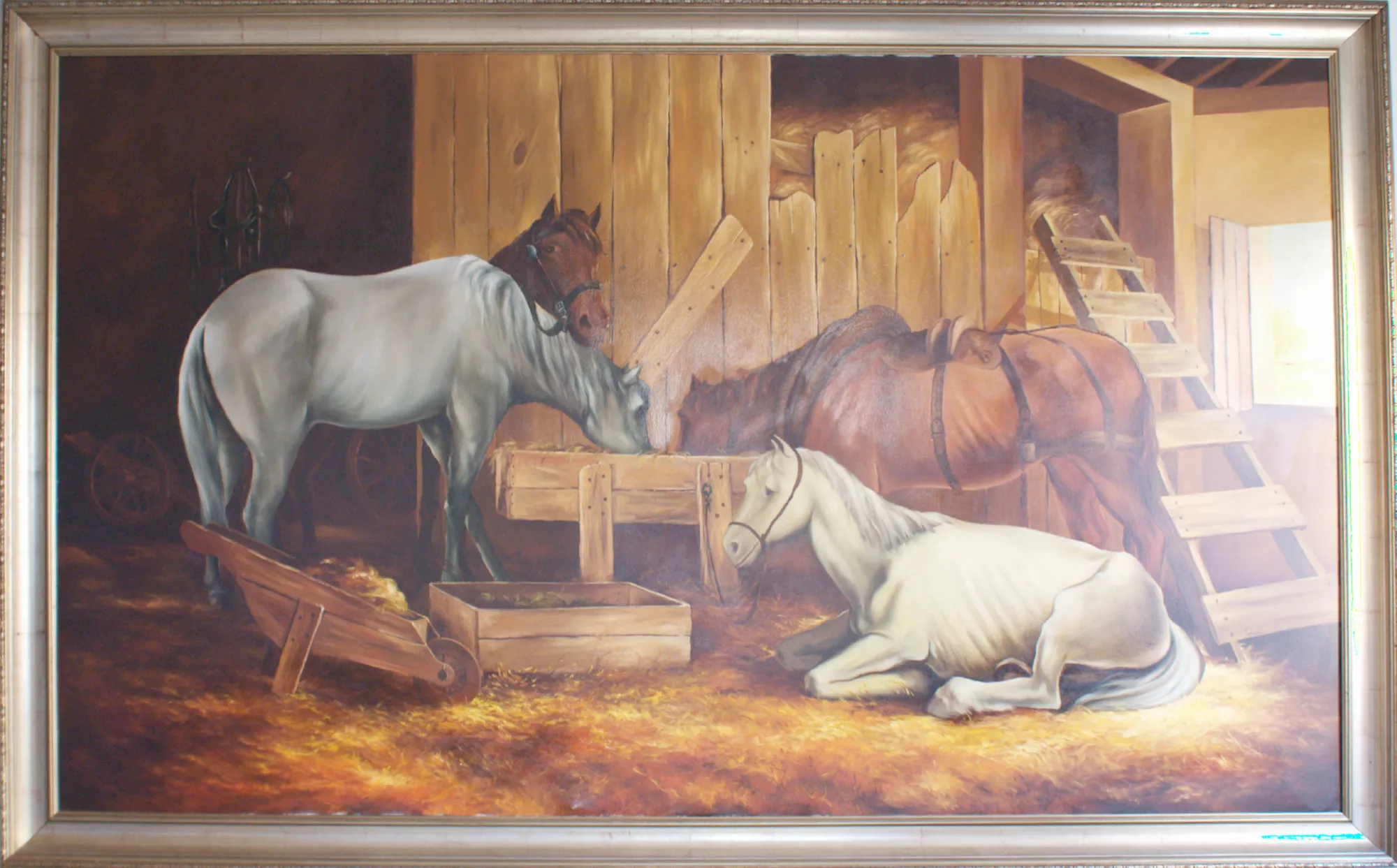
In The Three Stages of Life, Aly Mohsen creates a powerful and solemn pictorial allegory of the human life cycle, using the horse as a universal symbol of strength, labor, and destiny. Monumental in scale (239 × 144 cm), this is the largest painting ever produced by the artist—an element that significantly amplifies its visual, narrative, and symbolic impact, making it one of the most ambitious and representative works of his career.
The scene is set inside a barn, rendered with remarkable realism and refined sensitivity to light. A beam of natural light enters through a side window and spreads across the golden straw, creating a strong contrast between light and shadow. This luminous structure guides the viewer’s gaze and shapes the pictorial narrative with theatrical rhythm and deep emotional resonance.
The four horses depicted embody the three stages of life. On the left, two young horses interact with energy and vitality, symbolizing youth and early carefree existence. At the center, a draft horse—exhausted and hungry after a long day of labor in the fields—represents adulthood, marked by duty, fatigue, and responsibility. In the foreground, a white horse, emaciated and now devoid of strength, lies on the ground, refusing food despite its presence. This silent and poignant image evokes old age, the final waiting, and surrender to time.
The compositional structure relates the different physical conditions of the subjects through posture, spatial placement, and interaction with light. Chromatic variations, centered on warm and earthy tones, contribute to the unity of the image and to the clarity of its narrative progression.
From a technical standpoint, the painting demonstrates controlled brushwork, alternating compact passages with softer transitions. The rendering of materials — wood, straw, animal coats, and natural light — relies on tonal variation and a measured handling of pictorial matter, supporting both formal clarity and visual continuity.
The frame, characterized by light tones and a restrained finish, defines the boundary of the image and fulfills a visual containing function, accompanying the composition without interfering with its narrative and luminous structure.


