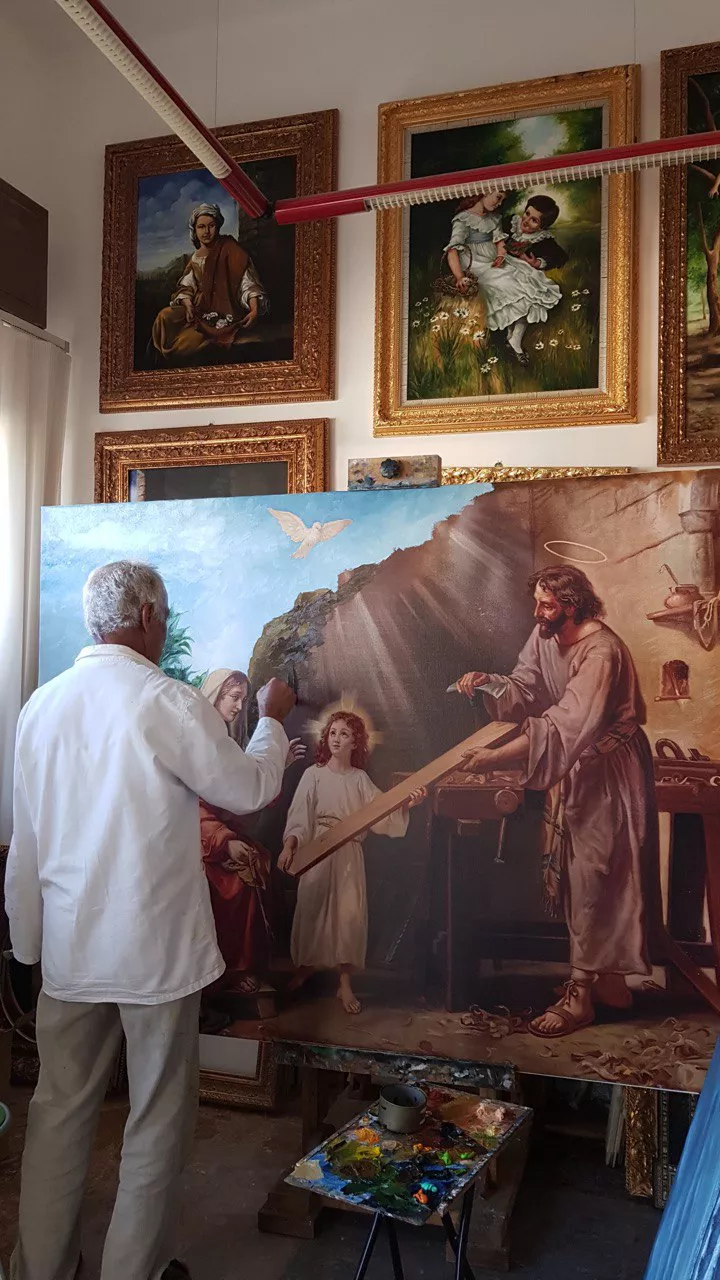
Aly Mohsen in his studio while painting a large figurative work with a sacred subject.
The photograph documents the artist’s painting process and his use of traditional oil painting techniques.
The aim of Mohsen’s painting technique was to represent the subject as realistically as possible, without errors in proportion, light, or shadow.
Through the rigorous use of perspective, chiaroscuro, and realism, his works seek to create the illusion of three-dimensionality, in accordance with the principles of trompe-l’œil.
The classical brush-painting process that he followed and taught to his students was structured in three stages:
1.First application
A rapid pass with a stiff brush, during which color is deposited by lightly scratching the canvas, without fully saturating the surface.
2. Second application
A subsequent pass using a soft brush and a greater amount of paint, aimed at defining forms. At this stage, new paint adheres more easily to the areas of bare canvas than to those already covered in the previous layer.
3.Final refinement
After drying and oil polymerization, the two layers merge. Final retouching creates three-dimensionality through the contrast between very light highlights and deep shadows, achieved by using the lightest and darkest colors.
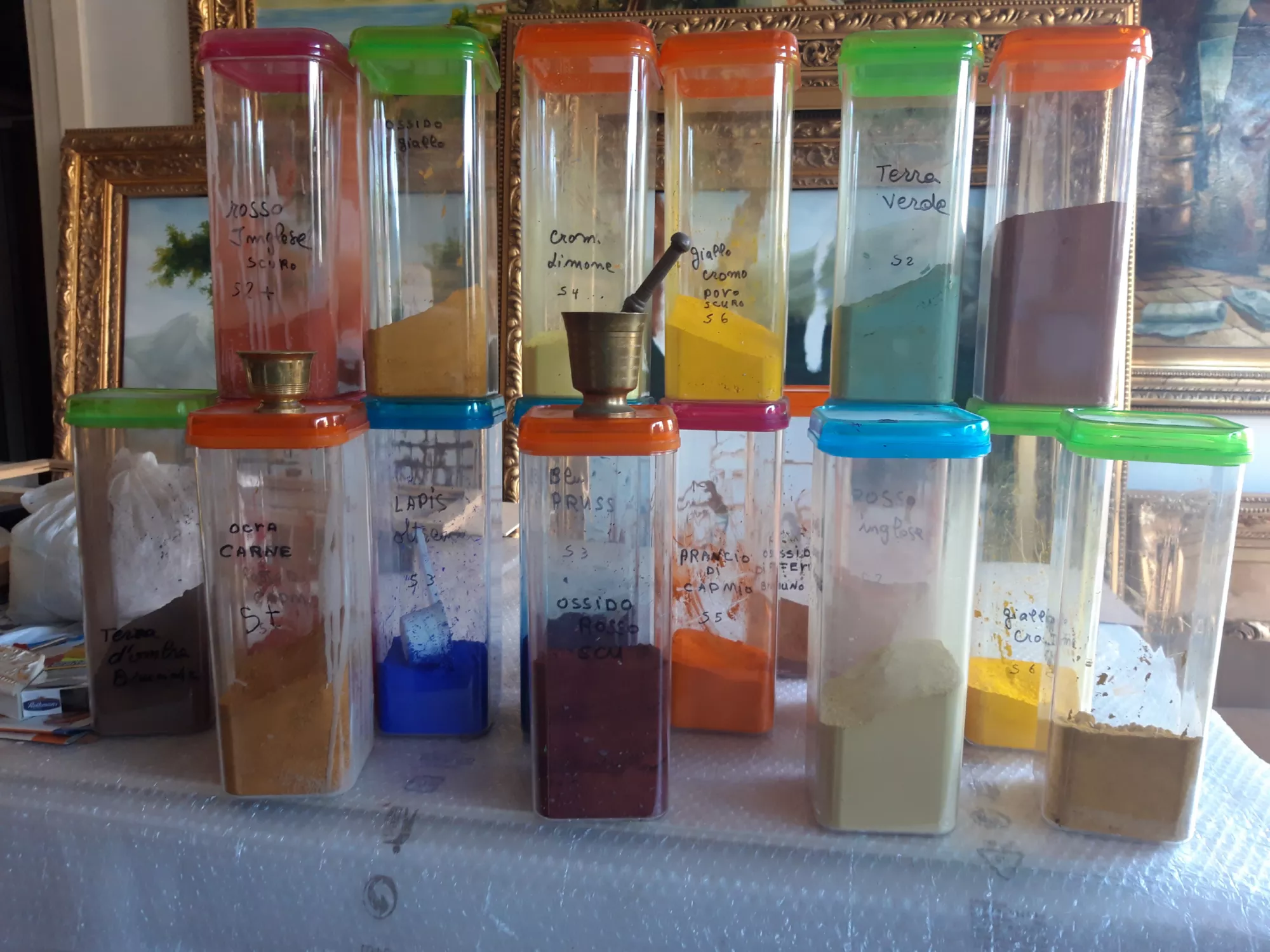
Mohsen employed 132 base colors and used generous quantities of paint, in clear opposition to so-called “canvas scrapers,” painters who minimize paint usage to reduce the cost of the most expensive component of a painting.
Another technique he mastered was palette knife painting, which requires the application of large quantities of paint in a single pass, without the possibility of retouching, as the surface layer dries faster than the underlying paint.