Description
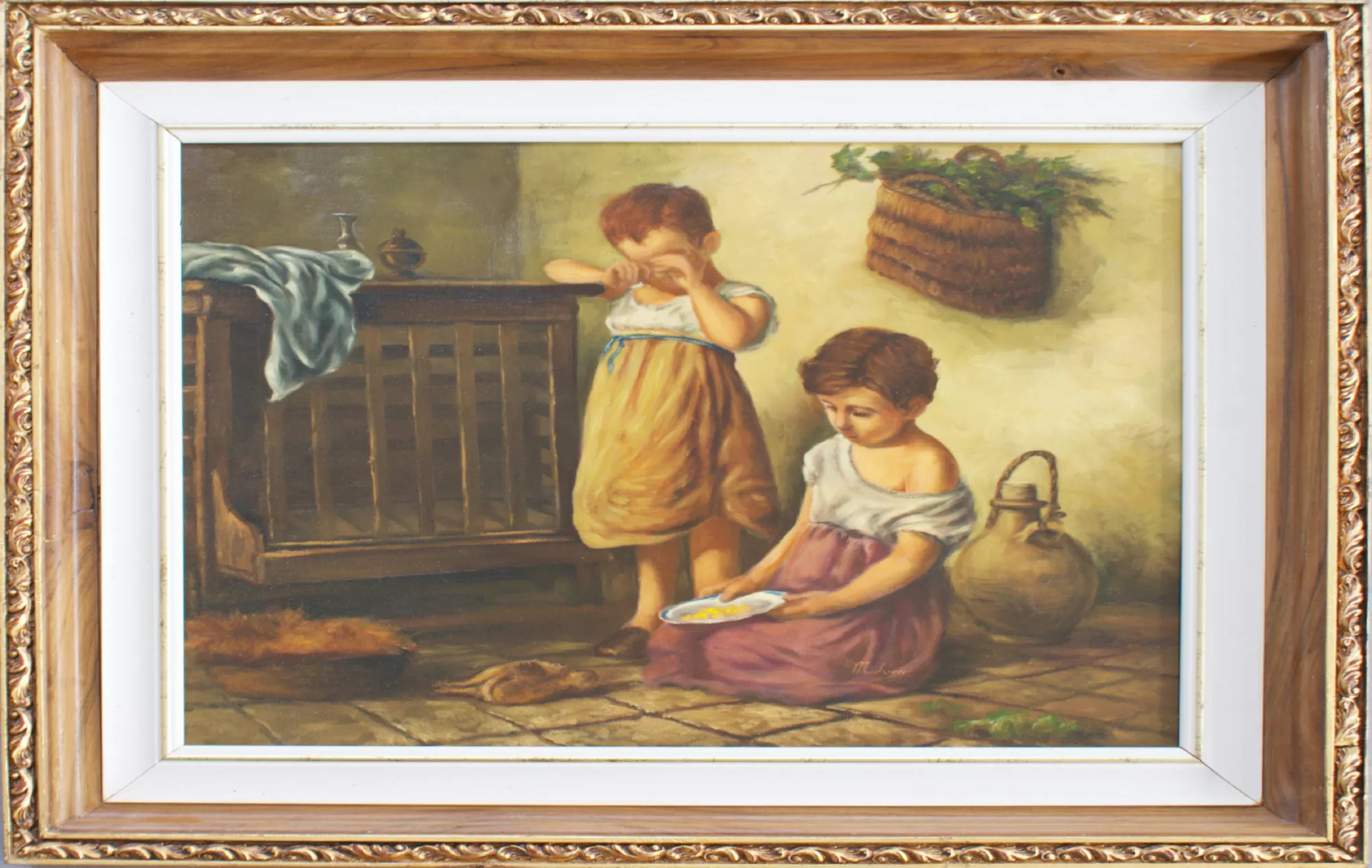
In The Death of the Chick, Aly Mohsen produces a copy of the homonymous painting by Antonio Rotta, one of the leading figures of nineteenth-century Italian genre painting, renowned for his focus on childhood and the emotional dimension of everyday domestic life.
The scene depicts two young girls within a modest interior, captured in a moment of quiet sorrow following the loss of a chick—a universal symbol of innocence, fragility, and the first encounter with loss. One child gazes at the lifeless animal, while the other wipes away her tears, translating grief into an immediate and deeply human emotional language.
The composition is intimate and restrained, built upon simple, authentic gestures devoid of rhetorical emphasis. The sober setting, free from superfluous elements, reinforces the narrative realism characteristic of Rotta’s poetic vision, in which ordinary life becomes a vehicle for empathy and moral reflection.
Warm, diffused light gently models the figures, avoiding dramatic contrasts and creating an atmosphere of contemplation and composed melancholy. The chromatic palette, dominated by warm, earthy tones, enhances the sense of domestic intimacy and shared emotional experience.
Through this copy, Aly Mohsen demonstrates a thoughtful understanding of nineteenth-century genre painting, combined with solid technical mastery in the rendering of faces, gestures, and textiles, positioning the work as a high-quality pictorial study.
The painting is completed by a classical gilded and lacquered wooden frame with a wide, light inner rebate, which elegantly encloses the scene and reinforces its historical, museum-quality, and exhibition-ready character.


