



Description
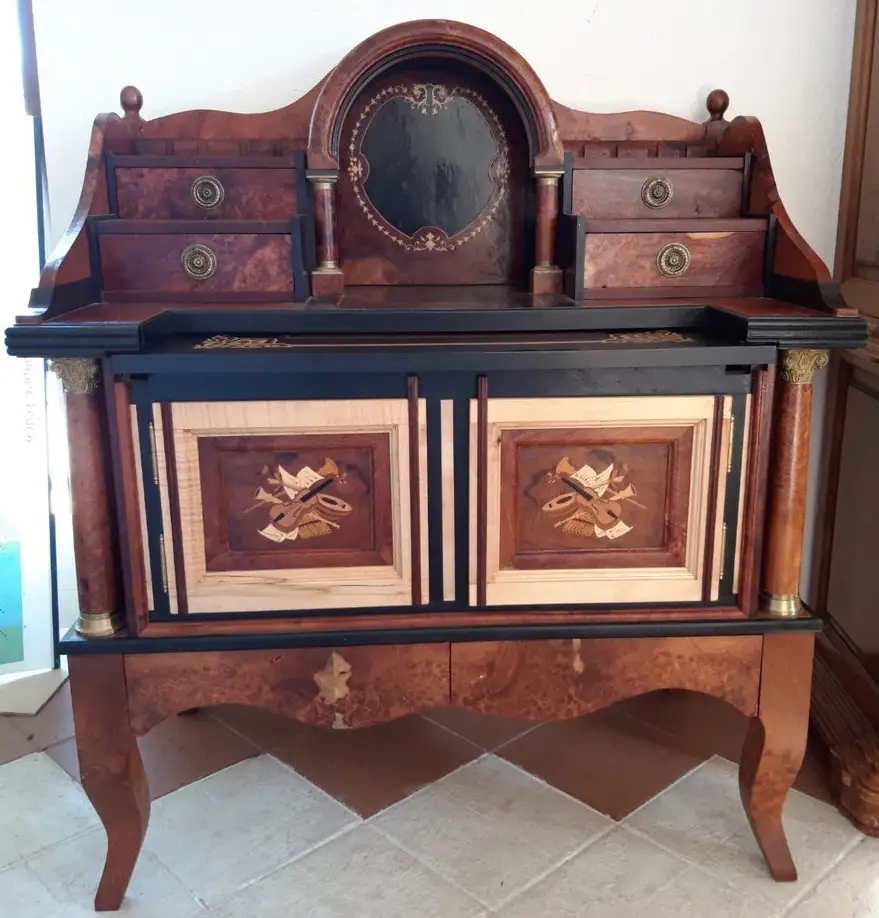
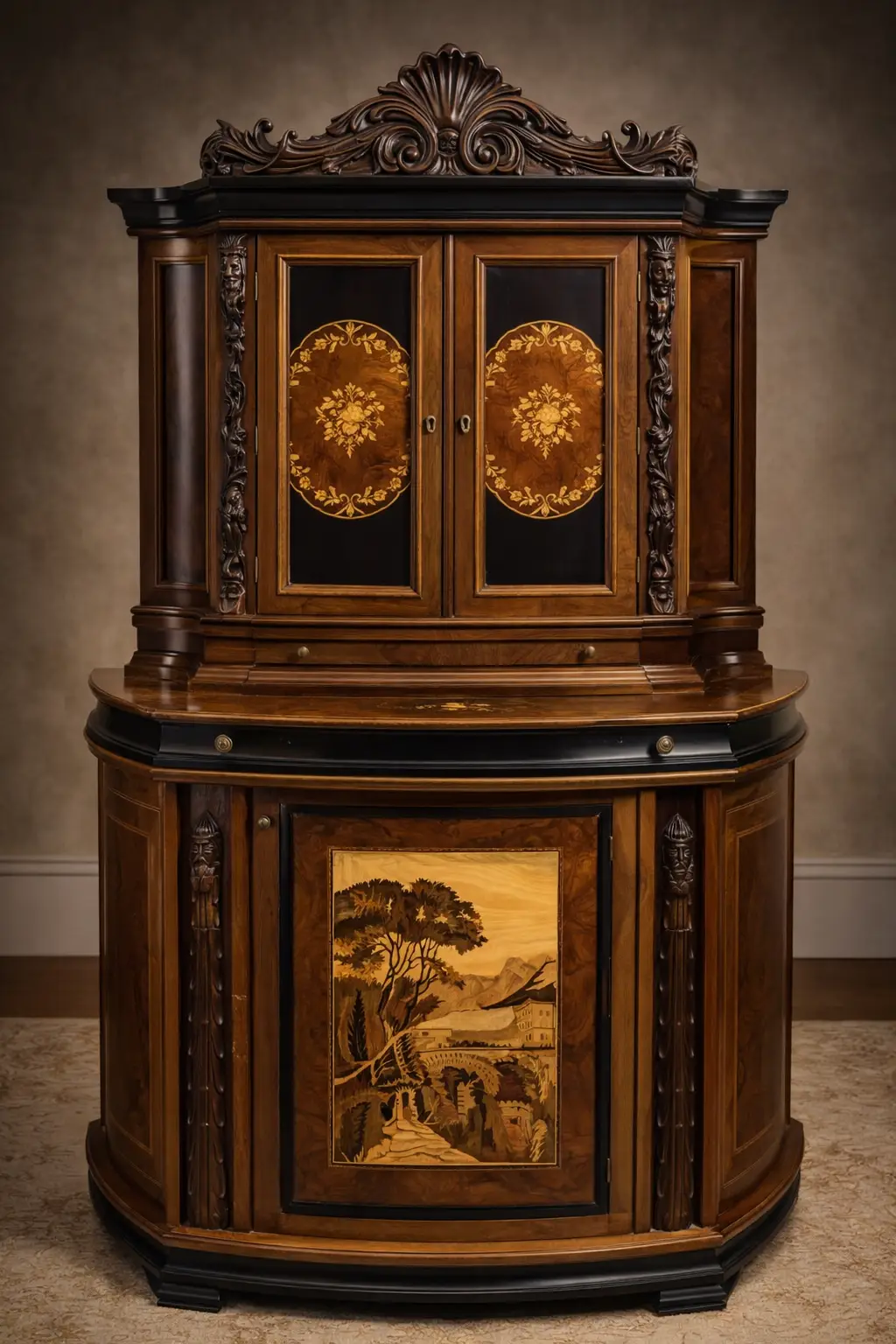
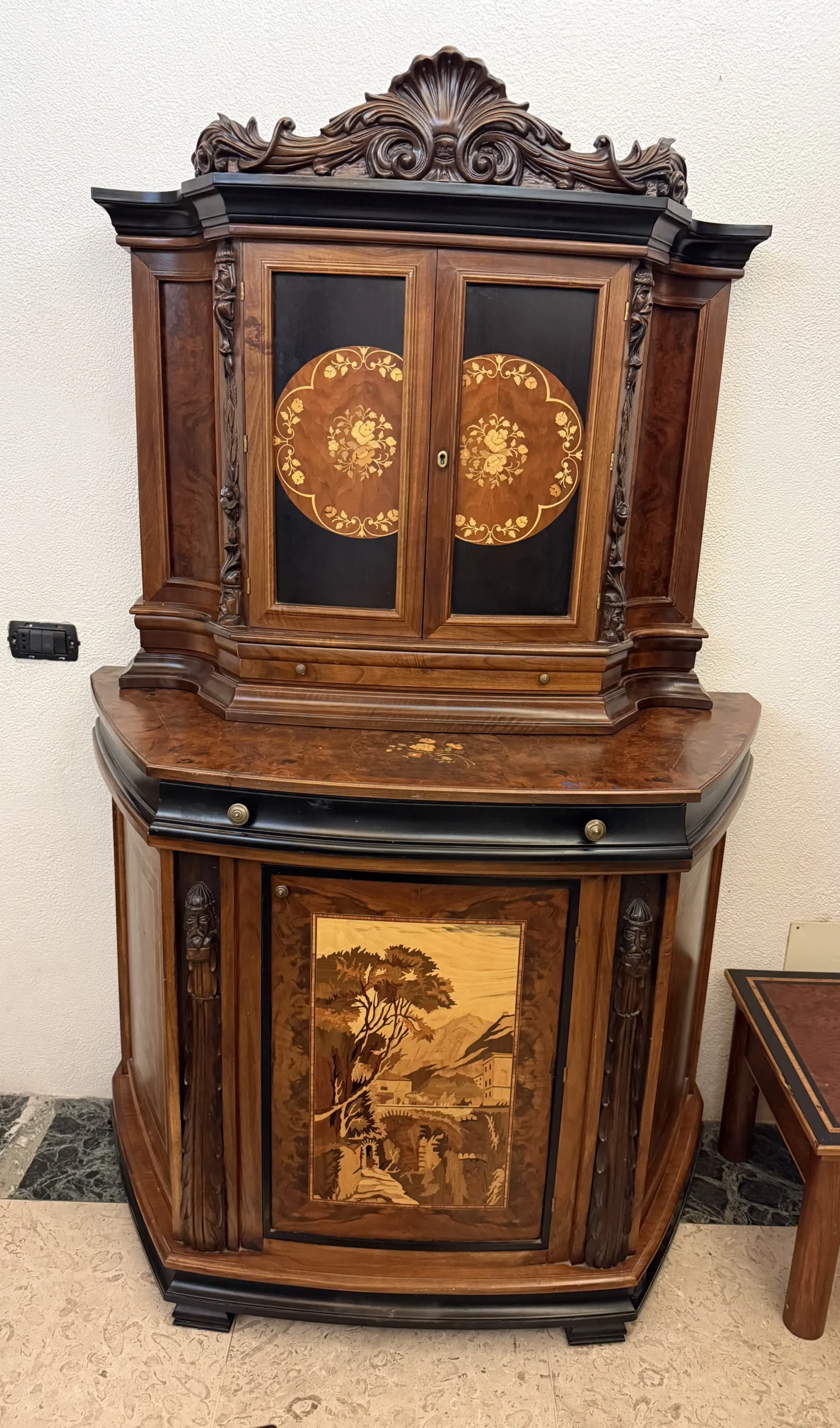
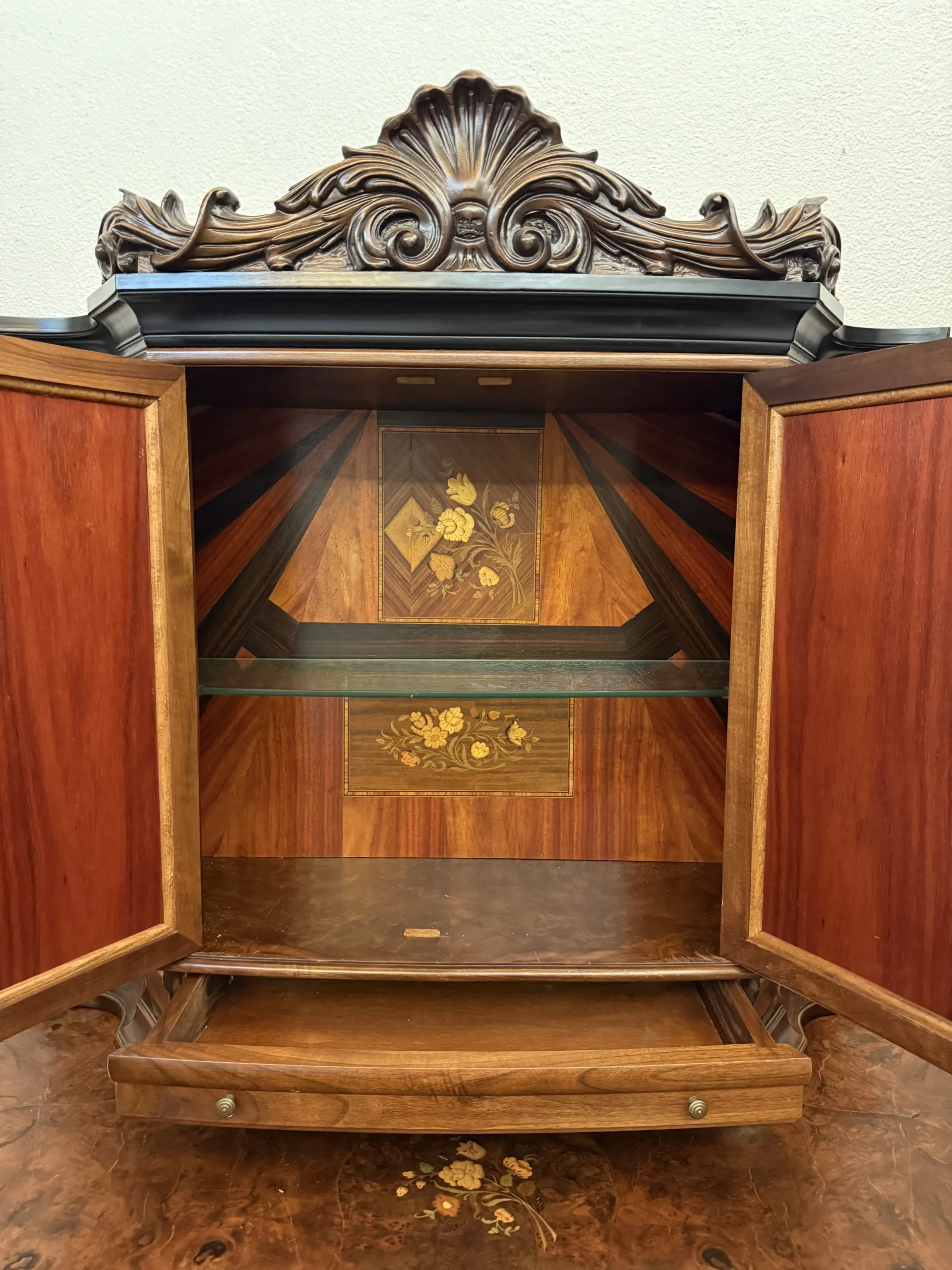
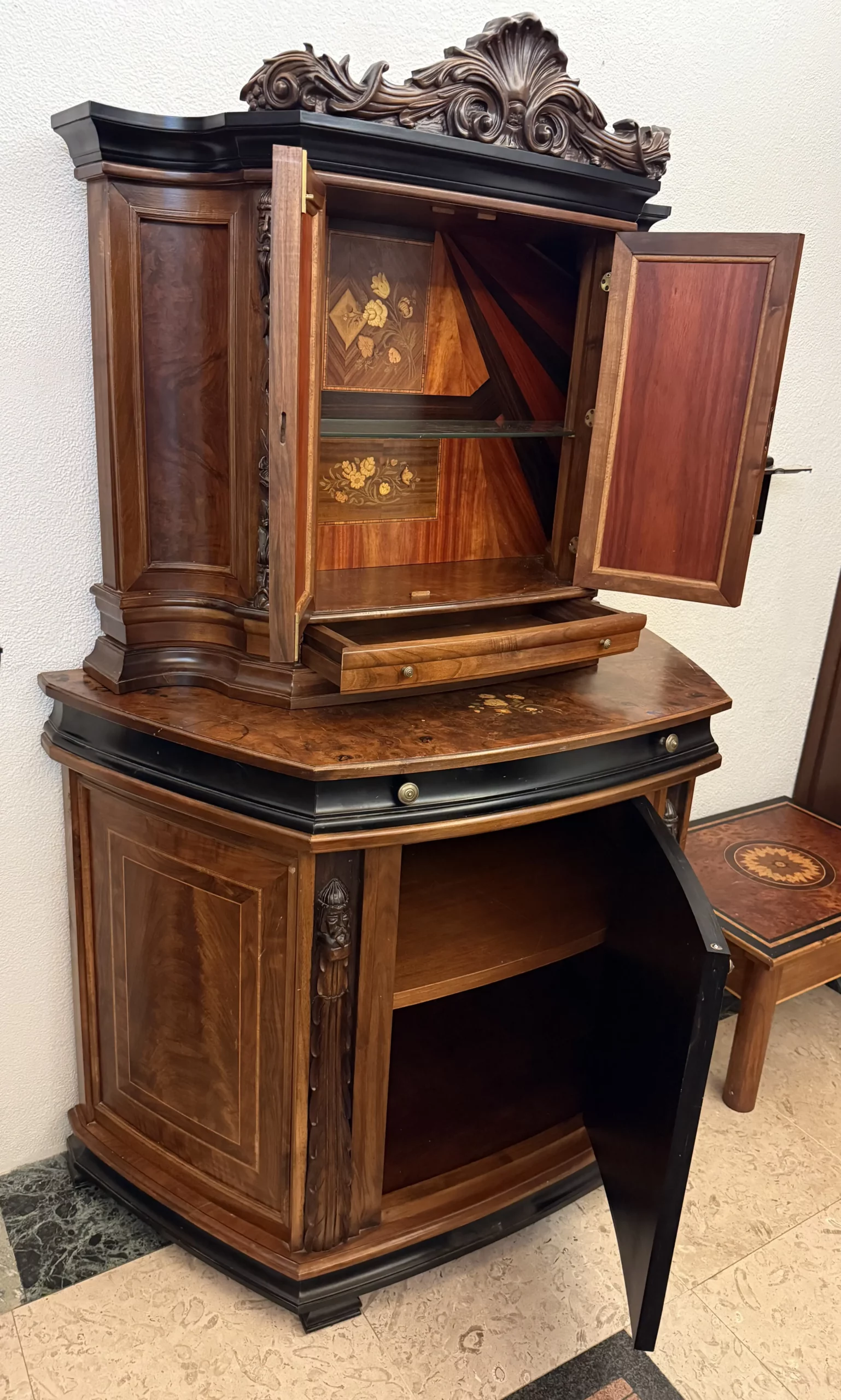
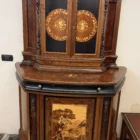
The Credenza del Ponte Vecchio di Ivrea is an inlaid and carved artistic cabinet conceived as a unique work of high-level cabinetmaking, in which figurative tradition, authorial woodworking, and landscape reference of an identity-based nature converge. The piece presents itself as a complex three-dimensional artifact, where architectural structure, sculptural decoration, and marquetry are integrated into a coherent and unified whole.
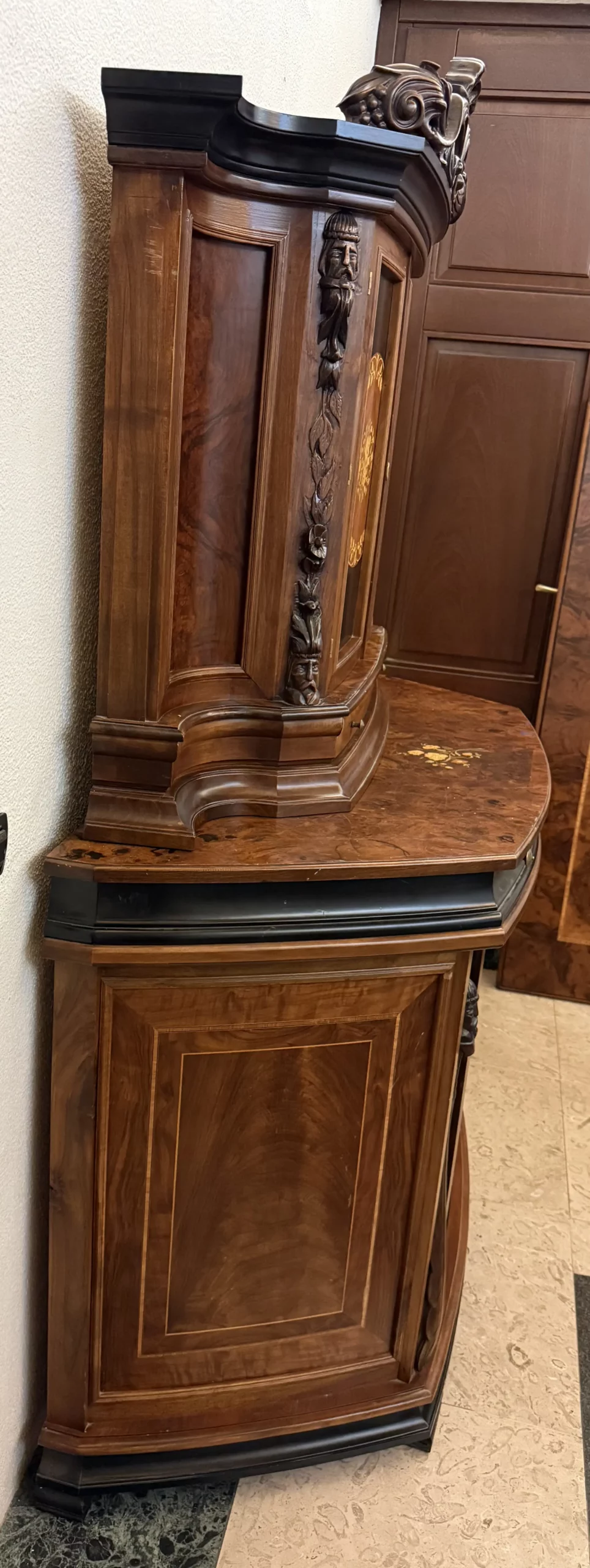
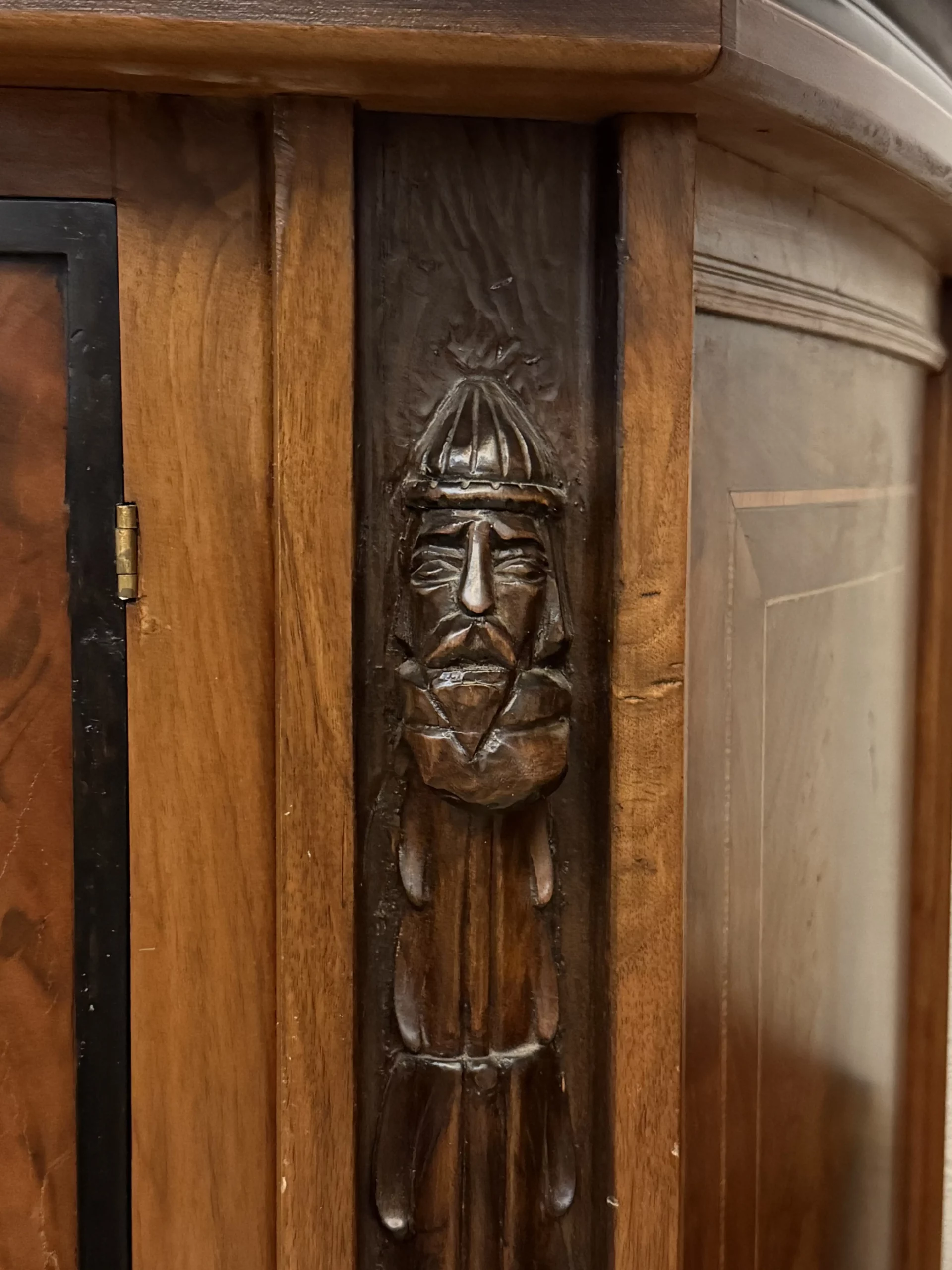
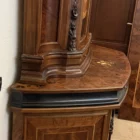
The structure is made of solid mahogany and walnut burl, used for the load-bearing elements and the main surfaces, with an alternation of compact areas and irregular grain patterns that articulate the overall volume. The sides feature hand-carved walnut sculptural elements, depicting stylized figures integrated vertically into the uprights. These carvings reinforce the cabinet’s plastic and monumental character and recall the European tradition of figurative wood carving.
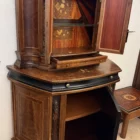
The upper edge and the drawer are executed in ebony, introducing a clear chromatic contrast with the warmer tones of the main structure. The upper doors are set against dark ebony grounds and enriched with polychrome floral inlays made of maple, walnut, green ebony, and cherry wood. These inlays are arranged in symmetrical compositions that establish a balance between decorative articulation and geometric order.
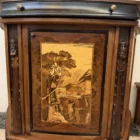
The central element of the work is the large inlaid panel located in the lower section of the cabinet, depicting a view of the Ponte Vecchio of Ivrea. The landscape scene is constructed through a complex combination of wood species, including maple, walnut burl, light and dark walnut, and green ebony, employed to achieve tonal variation, spatial depth, and a controlled sense of light. The panel is enclosed within a rosewood frame that defines its perimeter and visually separates the image from the surrounding structure.
The interior of the cabinet is fully finished and decorated, with panels featuring floral marquetry and surfaces enriched by radial geometric patterns and angular fields created through the juxtaposition of different wood species. The interior decorations are conceived as an integral part of the work and remain fully visible thanks to the presence of a glass shelf, which allows continuous visual access to the inlays when the cabinet is open.
The cabinet is completed by a continuous structural framing that follows the upper and lower profiles of the piece, executed in a dark-toned wood with a uniform finish. This framing serves to visually contain the overall volume and to connect the various wooden surfaces into a coherent and unified composition.