The techniques and materials used

Introduction

The generosity that characterized Aly Mohsen’s life is also reflected in his choice of techniques and materials. His goal was always the highest possible level of quality: no shortcuts in the creative process and no compromise in the selection of raw materials.

Aly Mohsen was a figurative painter who primarily worked with oil on canvas, personally producing many of the elements that make up the artwork, from pigments prepared with natural powders to frames and wooden elements crafted in his own workshop.

His artistic practice combined painting, artistic craftsmanship, and cabinetmaking, following a traditional conception of the artwork as a complete object, from the preparation of the support to its final presentation.

Paintings

The paintings of Abdel Mohsen represent the most rigorous expression of classical figurative painting. Techniques and materials are selected with the aim of projecting the work into time, minimizing any possible form of deterioration. Every decision is oriented toward durability, stability, and the highest standard of execution.

Pigments

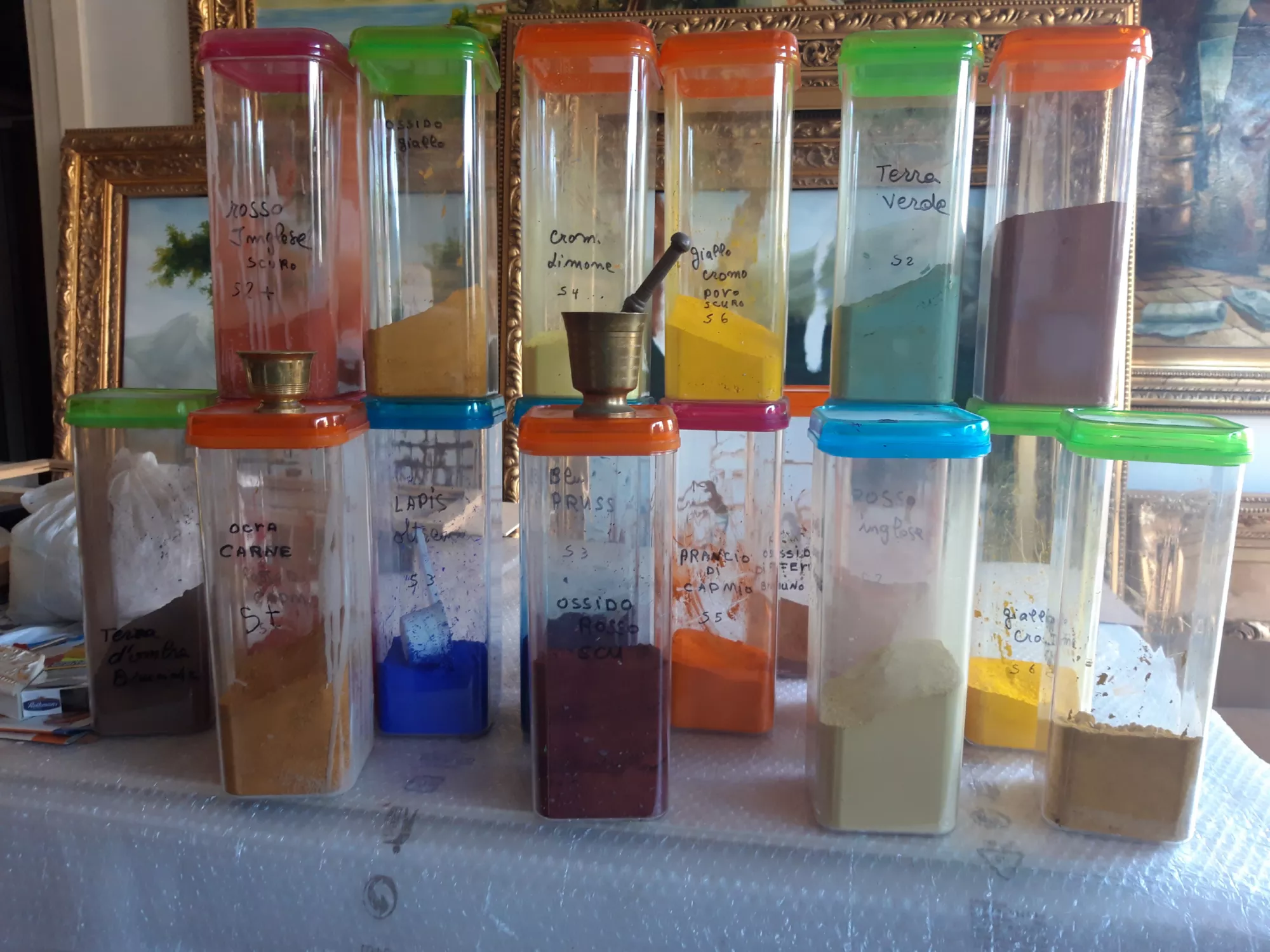
Natural pigments in powder form used by Aly Mohsen to prepare oil paints in his studio.
The artist often produced his own colors by mixing natural pigments with linseed oil and natural turpentine.

Mohsen consistently used linseed oil paints based on natural pigments, historically relying on three main manufacturers: Lefranc Bourgeois, Winsor & Newton, and Maimeri.

Natural pigments provide greater longevity and superior resistance to light compared to chemically synthesized pigments. When these manufacturers progressively shifted to synthetic pigments in order to reduce production costs, Mohsen purchased the last remaining stocks of natural-pigment paints. He later began producing his own colors, starting from powdered natural pigments mixed with linseed oil and natural turpentine essence.

Painting techniques

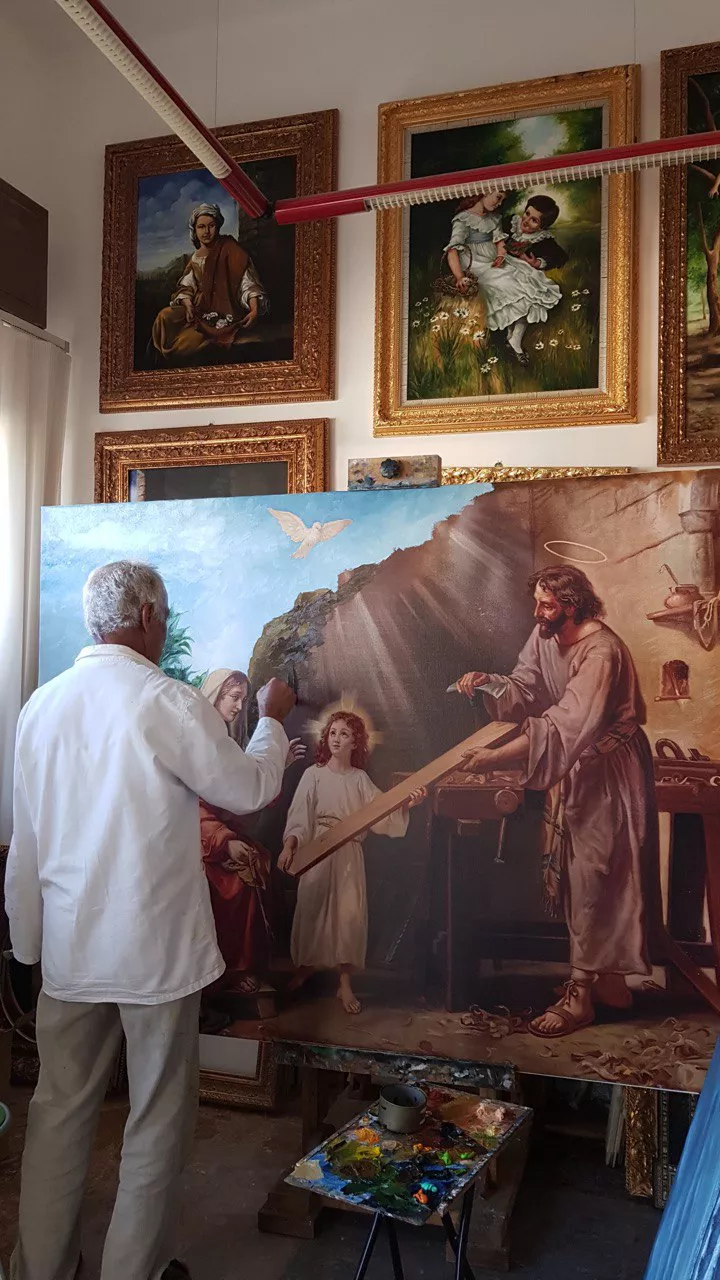
Aly Mohsen in his studio while painting a large figurative work with a sacred subject.
The photograph documents the artist’s painting process and his use of traditional oil painting techniques.

The aim of Mohsen’s painting technique was to represent the subject as realistically as possible, without errors in proportion, light, or shadow.

Through the rigorous use of perspective, chiaroscuro, and realism, his works seek to create the illusion of three-dimensionality, in accordance with the principles of trompe-l’œil.

The classical brush-painting process that he followed and taught to his students was structured in three stages:

1.First application

A rapid pass with a stiff brush, during which color is deposited by lightly scratching the canvas, without fully saturating the surface.

2. Second application

A subsequent pass using a soft brush and a greater amount of paint, aimed at defining forms. At this stage, new paint adheres more easily to the areas of bare canvas than to those already covered in the previous layer.

3.Final refinement

After drying and oil polymerization, the two layers merge. Final retouching creates three-dimensionality through the contrast between very light highlights and deep shadows, achieved by using the lightest and darkest colors.

Mohsen employed 132 base colors and used generous quantities of paint, in clear opposition to so-called “canvas scrapers,” painters who minimize paint usage to reduce the cost of the most expensive component of a painting.

Another technique he mastered was palette knife painting, which requires the application of large quantities of paint in a single pass, without the possibility of retouching, as the surface layer dries faster than the underlying paint.
The support: canvas and stretcher

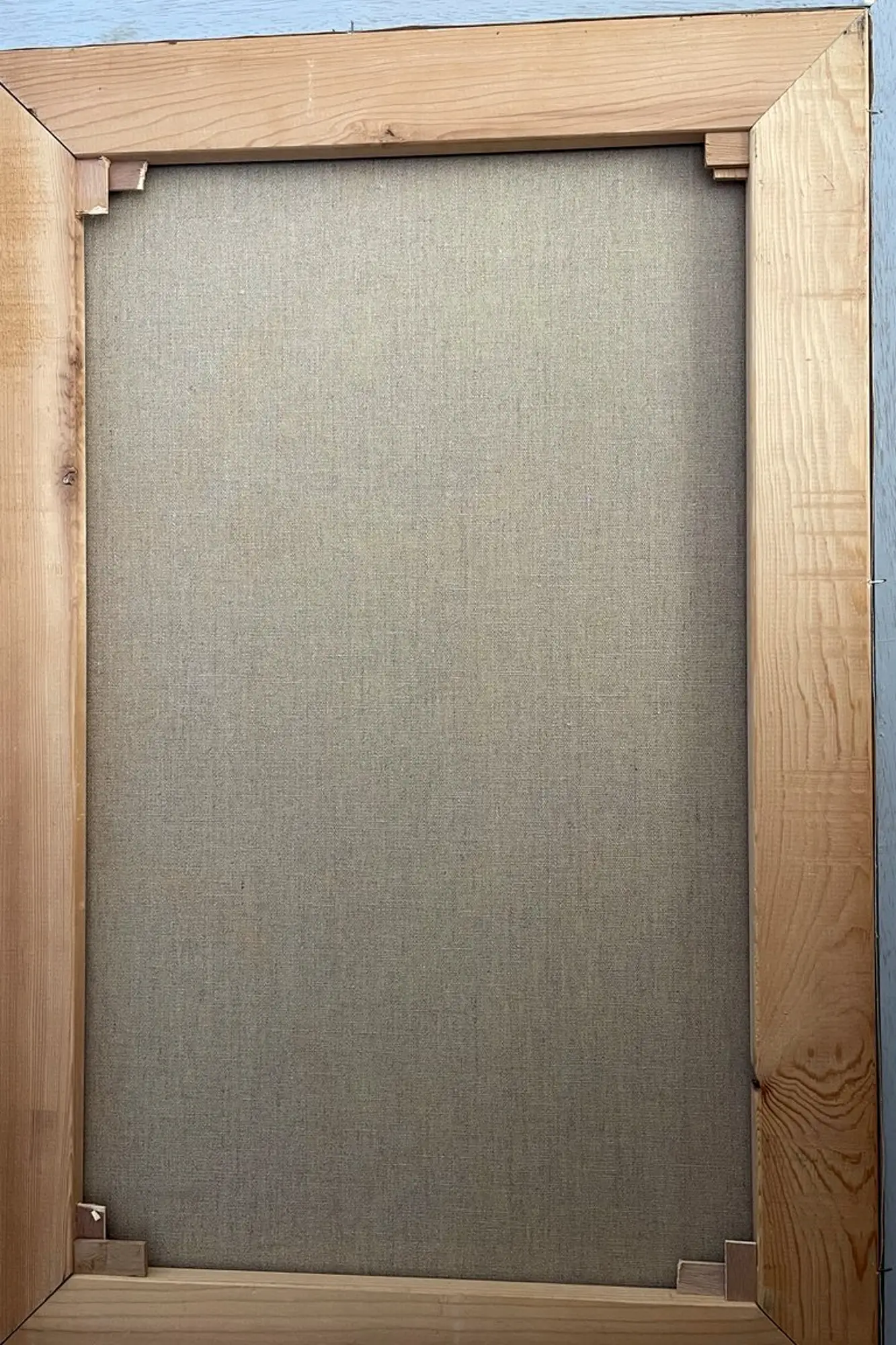
Canvas stretcher and linen support used for a painting by Aly Mohsen.
The artist personally prepared many of his painting supports, mounting the canvas on wooden stretchers in his workshop.

Canvases may be made from three materials, in descending order of quality: linen, cotton, and jute. Mohsen used almost exclusively linen or cotton canvases; the few works executed on jute were produced for teaching purposes, in order to instruct students on the specific techniques required for this support.

He personally prepared the ground of his canvases, using Bologna chalk or kaolin bound with rabbit-skin glue, ensuring optimal paint absorption.

To minimize color loss over time, Mohsen used only expandable wooden stretchers, capable of accommodating the expansion and contraction of the canvas caused by changes in temperature and humidity. He built these stretchers himself, employing mortise-and-tenon joints without nails—the same construction principle used in his furniture.

Frames

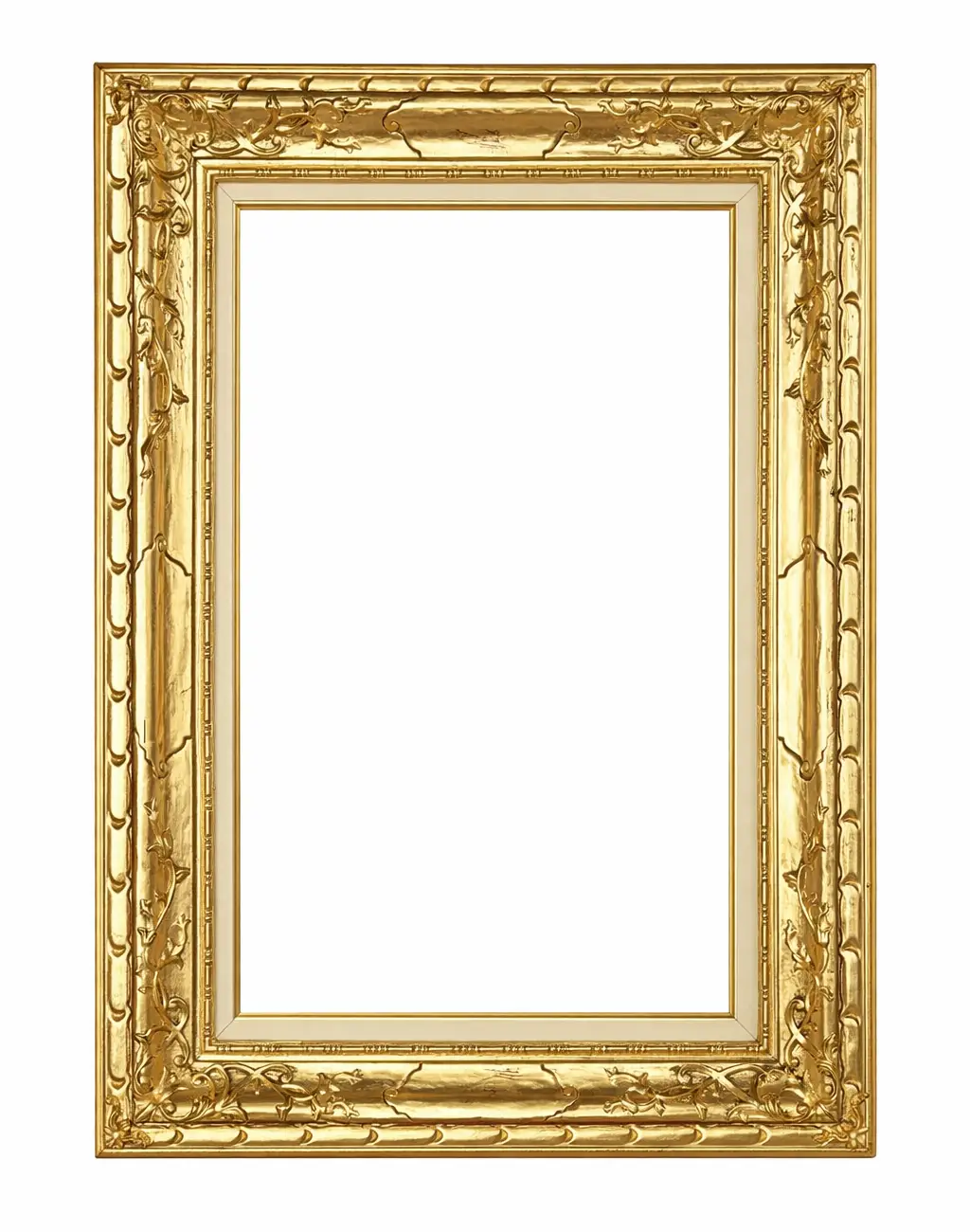
Gilded frame produced using traditional gilding and decorative techniques.
Aly Mohsen often designed and crafted the frames for his paintings himself, considering them an integral part of the pictorial composition.

In Mohsen’s work, the frame is an integral part of the painting. Each painting requires a dedicated frame, in harmony with the subject and the work’s color palette. As he liked to say:

“The frame is like the dress of a beautiful woman”

Frames could be simple, gilded, or silvered; decorative elements were made of wood paste and, in some cases, applied to walnut structures. To conceal frame joints, Mohsen created custom corner elements by shaping raw wood paste, which was then gilded.

Gilding was carried out using the water-gilding technique, which involves an intermediate layer between wood and gold to separate materials that react differently to humidity. This layer consisted of Armenian bole and rabbit-skin glue. After drying, gold leaf was applied with a squirrel-hair brush, using electrostatic attraction to adhere the gold to the surface.

Cabinetmaking

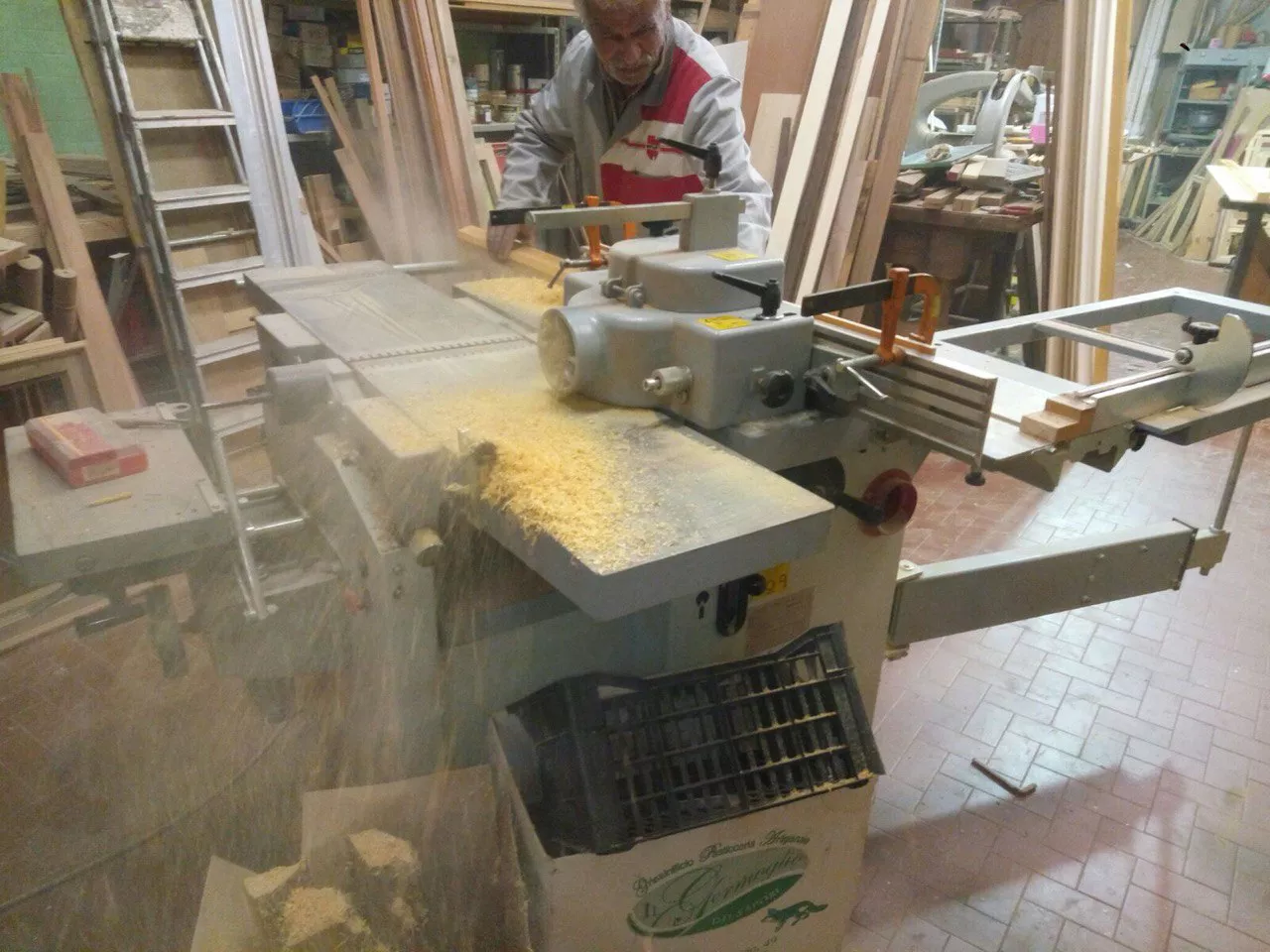
Aly Mohsen in his workshop working with professional woodworking machinery.
The image documents the artisanal process behind the creation of her unique art furnishings, crafted entirely by hand with fine woods and traditional cabinetmaking techniques.

The monumental cabinetmaking works in the Archive are unique pieces, created without preparatory drawings or preliminary technical designs, following a direct and instinctive creative process.

Mohsen started with raw wood planks and personally carried out every stage of the process, up to the beeswax finish. His workshop was equipped with professional machinery, including a circular saw, a miter saw, a milling machine, a band saw, and a press for gluing inlays.

Desks and writing tables are made of solid wood with mortise and tenon joints, without screws, and are not disassembled. The only exceptions are the Poker and Three Card Desk and the Neoclassical Desk, designed with detachable elements for easy transport.

All the works are decorated with hand-crafted fretwork inlays. The main woods used include:

  • ebony for black
  • white maple for white
  • mahogany for dark red-brown
  • walnut in various shades
  • cherry for red
  • rosewood for brown-purple
  • padouk for red-orange
  • rosewood for pink

Thuja burl, walnut, and oak veneers also frequently appear on writing desks.