Description
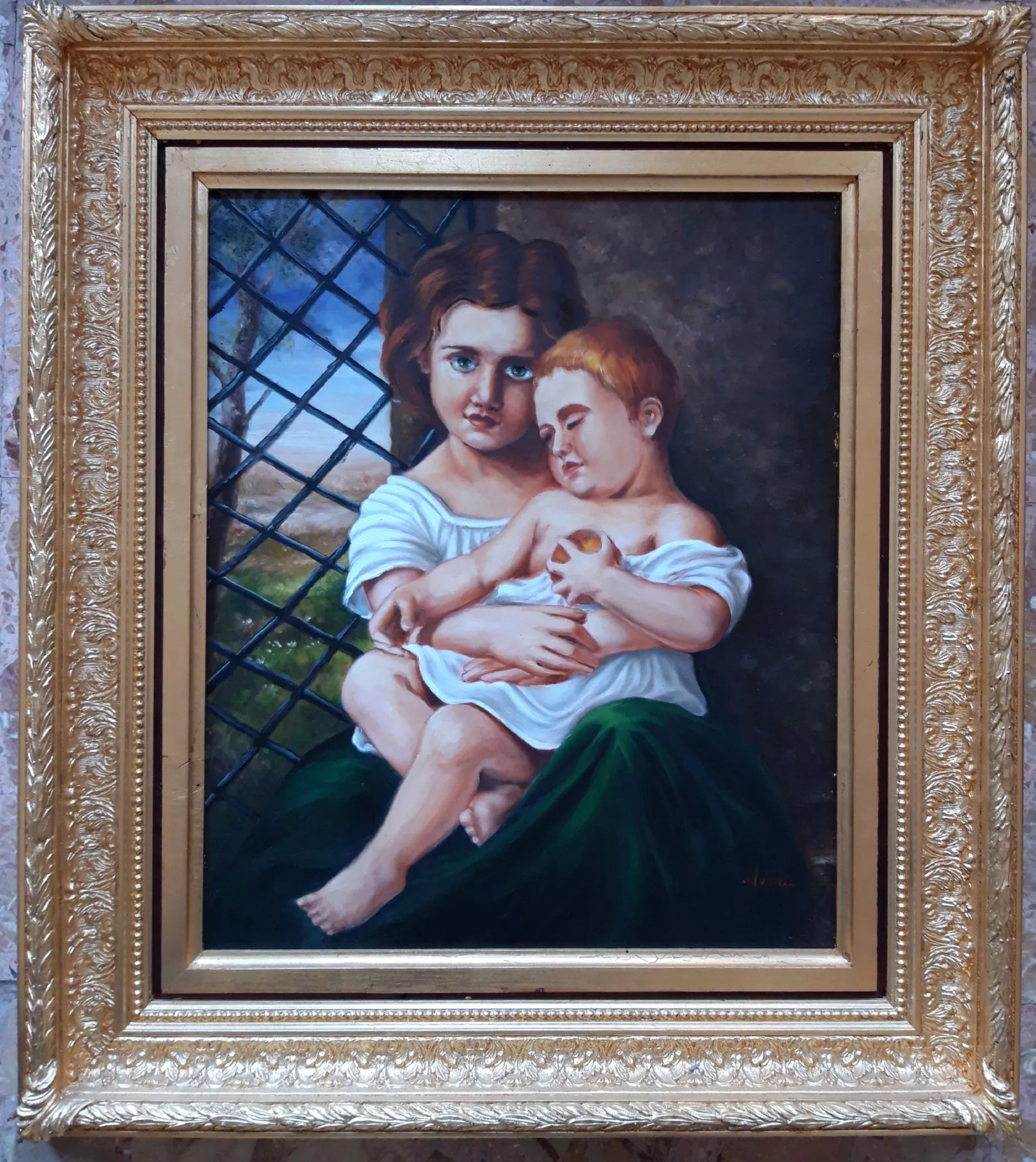
This figurative painting by Aly Mohsen addresses the detention of migrant children at the United States border in 2018, transforming a documented historical event into a symbolic image with universal ethical implications. Rather than functioning as direct reportage, the work offers a reflective interpretation of childhood vulnerability, forced separation, and the violation of fundamental human rights.
In the foreground, two children cling to each other in a gesture of protection and dependence, recalling the classical iconography of maternal embrace and sacred shelter. This historical reference, recontextualized within a contemporary setting, heightens the contrast between innocence and institutional violence.
The background is defined by a rigid metal fence, a symbol of confinement, exclusion, and loss of freedom. Its geometric severity contrasts with the softness of the children’s bodies, establishing a clear visual and moral tension and functioning as a metaphor for systemic dehumanization.
Mohsen’s figurative approach combines technical discipline with ethical engagement. By employing a traditional visual language to address a contemporary humanitarian crisis, the work aligns with a broader tradition of socially conscious figurative painting, achieving emotional impact through compositional clarity rather than expressive excess.
The classical gilded frame, inspired by historical painting traditions, reinforces the conceptual contrast between form and subject, underscoring the gravity of the scene and the continuity between past visual languages and present moral questions.
Through its synthesis of historical reference, symbolic clarity, and ethical concern, the work stands as a historically readable example of contemporary figurative painting engaged with the social realities of its time.


